

Every parent expects their child’s transition into adulthood to come with challenges — a few setbacks, moments of uncertainty, or times when motivation seems low. But sometimes, what looks like normal growing pains may actually be something deeper — a pattern known as Failure to Launch (FTL).
This condition describes young adults who struggle to take the next steps toward independence — whether it’s finding a job, pursuing education, or managing responsibilities. So how can you tell the difference between temporary struggles and signs that your young adult needs professional support?
Let’s explore the key differences, causes, and when it might be time to consider a structured Failure to Launch program like At The Crossroads in Utah.
Key Takeaways
-
It’s normal for young adults to struggle with transitions, but long-term dependency may signal deeper issues.
-
Recognizing signs of failure to launch early can prevent years of frustration for both parents and young adults.
-
Professional programs like At The Crossroads offer tailored support to help young adults build confidence, life skills, and independence.
-
Parental awareness and early intervention are key to lasting success.
Understanding Normal Growing Pains vs. Failure to Launch
Normal Growing Pains
Every young adult experiences periods of uncertainty. It’s part of the process of figuring out who they are and what they want. Common examples include:
-
Taking extra time to choose a college major or career path
-
Experiencing stress or anxiety about adulthood
-
Relying on parents temporarily during transitions
-
Feeling unmotivated after setbacks (like job loss or college dropout)
These are short-term and typically improve as the young adult gains confidence and experience. With emotional support and encouragement, they usually regain motivation.
Signs of Failure to Launch
Failure to Launch goes beyond temporary struggles. It often involves long-term dependency, lack of initiative, and avoidance of adult responsibilities. Common signs of failure to launch include:
-
Chronic lack of motivation or direction
-
Avoiding work, school, or social commitments
-
Heavy dependence on parents for finances or decision-making
-
Difficulty managing emotions or coping with stress
-
Withdrawal from friends, family, or activities
-
Low self-esteem or fear of failure
If these patterns persist for months or years, it’s a sign that deeper emotional or behavioral issues might be at play.
When to Worry: Recognizing Red Flags
So when should you start to worry? It comes down to duration and impact.
If your young adult’s struggles:
-
Continue for an extended period (6+ months)
-
Interfere with their independence and relationships
-
Create stress or conflict at home
…then it’s time to seek guidance.
At At The Crossroads, many parents reach out after realizing their young adult’s patterns are no longer just a “phase.” The earlier the intervention, the higher the chances of long-term success and independence.
Why Some Young Adults Fail to Launch
Failure to Launch is not caused by laziness — it’s often rooted in complex emotional, psychological, or environmental factors. Common causes include:
| Root Cause | Description |
|---|---|
| Anxiety or Depression | Emotional challenges that make independence feel overwhelming. |
| Overprotective Parenting | When parents do too much, preventing growth and resilience. |
| Lack of Life Skills | Poor preparation for responsibilities like budgeting, cooking, or time management. |
| Technology & Isolation | Excessive screen time or gaming can lead to social withdrawal. |
| Fear of Failure | Perfectionism or insecurity holding them back from trying new things. |
Understanding these causes helps parents and professionals design targeted support strategies.
The Benefits of Professional Help
When the line between growing pains and failure to launch becomes blurred, structured intervention can make a life-changing difference.
Programs like At The Crossroads in Utah specialize in guiding young adults toward independence through:
-
Life skills training (budgeting, cooking, job prep)
-
Therapeutic coaching to manage anxiety, depression, or low confidence
-
Career and education guidance
-
Supportive community living to build responsibility and accountability
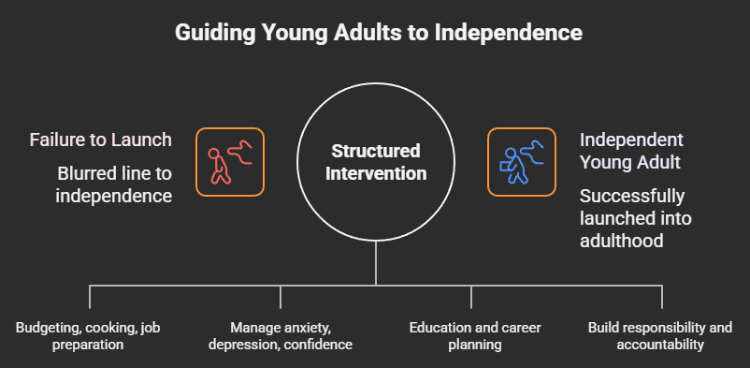
These programs provide a bridge between dependence and self-sufficiency — helping young adults take control of their futures.
How Parents Can Help Before Seeking a Program
While professional help is sometimes necessary, there are steps parents can take at home to encourage independence:
-
Set clear boundaries around finances and responsibilities
-
Encourage small, achievable goals instead of overwhelming expectations
-
Support without rescuing — allow natural consequences
-
Foster open communication rather than judgment
These small changes can make a big impact when combined with ongoing support.
Conclusion
It’s not always easy to tell the difference between a rough patch and a serious setback — but when your young adult seems “stuck” for too long, help is available.
A structured program like At The Crossroads provides the tools, support, and accountability young adults need to rediscover motivation and purpose.
Contact At The Crossroads now to help your teen start building independence and confidence for the future.
Recent Comments