
Watching your teen grow into adulthood can be exciting — and overwhelming. Many parents find themselves asking: Is my child ready for independent living? For some, the answer isn’t clear until real-world challenges arise — managing money, finding a job, or simply maintaining motivation.
That’s where Life Skills come in. These are the everyday tools young adults need to function confidently in the world — things like time management, communication, budgeting, and self-care.
At At The Crossroads, a Young Adult Transitional Program in Utah, we help families and their teens bridge the gap between dependence and independence. This guide will show you how parents can effectively teach Life Skills at home and when it might be time to seek professional support.
Key Takeaways
-
Life Skills are the foundation of independence, helping young adults manage emotions, responsibilities, and goals.
-
Parents can teach these skills through everyday routines, modeling, and constructive feedback.
-
Common signs of failure to launch may indicate the need for professional Life Skills coaching.
-
Structured Life Skills programs like those at At The Crossroads combine accountability, mentorship, and emotional support.
-
Teaching Life Skills early prevents long-term dependence and promotes confidence in adulthood.
Why Teaching Life Skills Matters
Life skills form the foundation of adult independence. Without them, even capable and intelligent young adults may struggle to meet daily responsibilities.
Common challenges like poor motivation, disorganization, or difficulty following through on tasks often trace back to missing foundational skills rather than unwillingness.
Life Skills programs teach more than chores or routines — they build confidence, accountability, and resilience, empowering young adults to thrive in their personal and professional lives.
Core Life Skills Every Young Adult Needs
Before diving into how to teach them, it’s helpful to understand what Life Skills actually include.
| Category | Examples of Life Skills |
|---|---|
| Practical Skills | Cooking, cleaning, budgeting, transportation planning |
| Emotional Skills | Self-awareness, stress management, resilience |
| Social Skills | Communication, teamwork, boundary-setting |
| Professional Skills | Time management, decision-making, goal-setting |
Each of these areas plays a crucial role in helping young adults navigate the transition to independence.
How Parents Can Teach Life Skills at Home
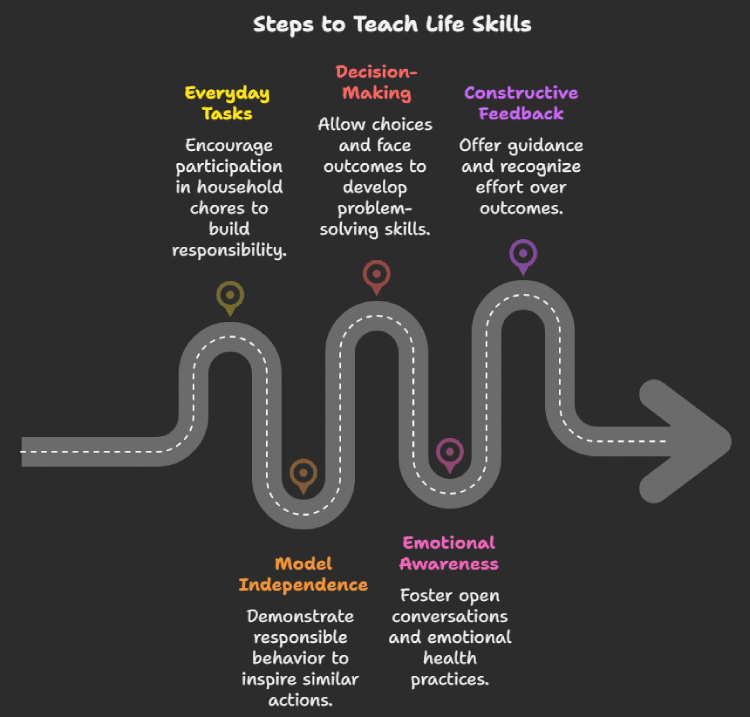
1. Start with Everyday Tasks
Teaching life skills doesn’t require a structured classroom. Start with what happens naturally at home.
Encourage your teen to participate in tasks like meal planning, doing laundry, or paying bills. Turn these into learning opportunities — not lectures.
Small responsibilities today build confidence for tomorrow.
2. Model Independence
One of the most powerful ways to teach is through example.
Show your young adult how you organize your week, manage stress, or handle finances responsibly.
They’re far more likely to follow routines they see modeled consistently than ones they’re told to do.
3. Encourage Decision-Making
Letting your young adult make their own choices — and face the outcomes — builds problem-solving skills.
Start small: allow them to budget for groceries, manage their schedule, or plan transportation.
Even when they make mistakes, these experiences teach independence and accountability.
4. Build Emotional and Social Awareness
Many young adults struggle not because they lack knowledge, but because they haven’t learned emotional regulation.
Encourage open conversations about stress, anxiety, and coping strategies.
You can also introduce mindfulness exercises or journaling to promote emotional health — key components of Life Skills development.
5. Provide Constructive Feedback, Not Control
As parents, it’s easy to step in and fix problems. But growth happens when young adults learn to adjust their behavior through feedback, not intervention.
Offer encouragement, ask guiding questions (“What could you do differently next time?”), and recognize effort as much as outcomes.
When to Seek Professional Support
Sometimes, despite best efforts, young adults remain stuck — unmotivated, dependent, or unable to progress.
This can be a sign of failure to launch, a common issue where capable young people struggle to transition into adult responsibilities.
If you notice persistent signs such as:
-
Avoidance of work, school, or responsibility
-
Anxiety about independence
-
Poor emotional regulation
-
Reliance on parents for basic needs
…it may be time to consider a structured Life Skills program.
At At The Crossroads, we combine Life Skills training, mentorship, and therapeutic guidance to help young adults practice independence in a supportive, real-world environment. Participants gain confidence through hands-on learning and individualized coaching — preparing them for long-term success.
The Benefits of Life Skills Programs
Enrolling your young adult in a professional program offers more than accountability — it provides community, structure, and measurable progress.
| Benefit | Outcome |
|---|---|
| Structure & Routine | Builds healthy daily habits |
| Therapeutic Support | Improves emotional regulation |
| Skill Coaching | Strengthens confidence and independence |
| Goal Tracking | Ensures consistent progress |
Families often see dramatic changes in motivation, organization, and emotional balance within weeks of structured support.
Conclusion
Teaching Life Skills to your young adult is one of the most valuable investments you can make in their future.
By combining supportive parenting with hands-on experiences — and professional guidance when needed — your child can develop the confidence and resilience needed to thrive on their own.
At At The Crossroads, we help young adults build a foundation for independence through personalized Life Skills programs in Utah.
Contact At The Crossroads now to help your teen start building the skills they need for a confident, independent future.
Recent Comments