

You’re standing in your kitchen at 11 a.m. on a Tuesday, and your 21-year-old is still asleep. Again. You’ve nagged about job applications. You’ve set boundaries about money. You’ve even tried therapy. But nothing changes. Your young adult still can’t seem to launch, and you’re wondering: Is this normal? Do they actually need a life skills program for young adults?
The answer isn’t always obvious. Every young adult develops at their own pace. But there’s a difference between being slow to launch and truly stuck. Life skills programs for young adults exist because some teens and young adults need more than encouragement or threats. They need structured, professional support to build the practical and emotional foundations that independence requires.
This article walks through five clear signs that your child might benefit from a life skills program for young adults. Not every sign means your teen needs residential treatment, but together, they paint a picture of whether professional intervention makes sense.
Sign #1: They Avoid Basic Self-Care
Your teen or young adult refuses to shower regularly. They wear the same clothes for weeks. Their room is a disaster. They skip meals or eat only junk food. They avoid the dentist, won’t cut their hair, and show no interest in personal hygiene.
This isn’t just being messy. This is avoidance.
When young adults avoid basic self-care, it often signals deeper struggles: depression, anxiety, low self-esteem, or sensory issues. They’re not being lazy. They’re struggling emotionally, and the task of showering feels overwhelming.
A life skills program for young adults addresses both. Clinicians help your teen understand why self-care feels hard, while daily structure and gentle accountability make it manageable. Through experience, showering becomes a habit again. They start feeling better, which motivates more self-care. The cycle shifts.
Parents often say: “I thought I was nagging badly, but really, my kid was depressed and needed help.”
Sign #2: They Show Zero Motivation About Their Future
Your young adult has no job, no school plan, and no goals. When you ask what they want to do, they shrug. They show no curiosity about college, careers, or independence. They play video games or scroll social media but have no plans beyond today.
This isn’t normal teenage indifference. This is apathy. And apathy is often a symptom of depression, anxiety, or learned helplessness.
Young adults without motivation need two things: (1) help understanding what’s blocking them emotionally, and (2) small wins that build momentum. A life skills program for young adults provides both. Through vocational training, academic support, and therapy, they start to see themselves as capable. One small success leads to another.
The families we work with at At The Crossroads often see this shift within weeks. A young adult who couldn’t imagine a future suddenly starts asking questions and making plans.
Sign #3: They Can’t Handle Setbacks or Criticism
Your teen gets a bad grade and shuts down for days. You mention they need to find a job, and they explode or cry. A friend makes a joke, and they take it personally. They fall apart over minor disappointments and can’t bounce back.
This is emotional fragility. It suggests anxiety, depression, low self-worth, or neurodivergence like ADHD or autism.
Young adults with poor emotional regulation struggle to function in real life. Jobs require handling mistakes. Relationships require managing conflict. Independence requires tolerating discomfort. Without these skills, they can’t move forward.
Life skills programs for young adults teach emotional regulation alongside practical skills. Your teen learns to identify emotions, use coping strategies, and develop resilience. They practice in a safe environment where failure is part of learning, not a threat to their identity.
Sign #4: They Lack Basic Life Skills and Show No Motivation to Learn
Your young adult can’t cook a simple meal. They don’t know how to do laundry, grocery shop, manage money, or create a resume. And when you try to teach them, they show no interest.
Some young adults missed learning these skills. Others have learning disabilities or anxiety that makes tasks feel impossible. Some have never been asked to do them and don’t see the point.
The problem: without these skills, they can’t live independently. And they won’t learn them through nagging or lectures.
A life skills program for young adults teaches through doing. They cook real meals in a real kitchen. They manage an actual budget. They practice interviews and job skills. Gradually, competence builds confidence, and they understand why these skills matter.
Here’s what matters: they learn in a judgment-free environment. Failure isn’t shameful; it’s part of the process.
Sign #5: They’re Isolated, Anxious, or Showing Signs of Depression
Your teen avoids friends. They won’t go to school, work, or social events without extreme anxiety or resistance. They’ve withdrawn from activities they used to enjoy. They talk about feeling hopeless or worthless.
These are mental health red flags. Isolation and depression often go hand in hand with failure to launch. Your young adult isn’t stuck because they’re lazy. They’re stuck because they’re struggling mentally.
A life skills program for young adults that includes therapy is essential here. Individual therapy helps address underlying anxiety or depression. Group settings help them feel less alone. Structured activities and peer support gradually pull them back into life.
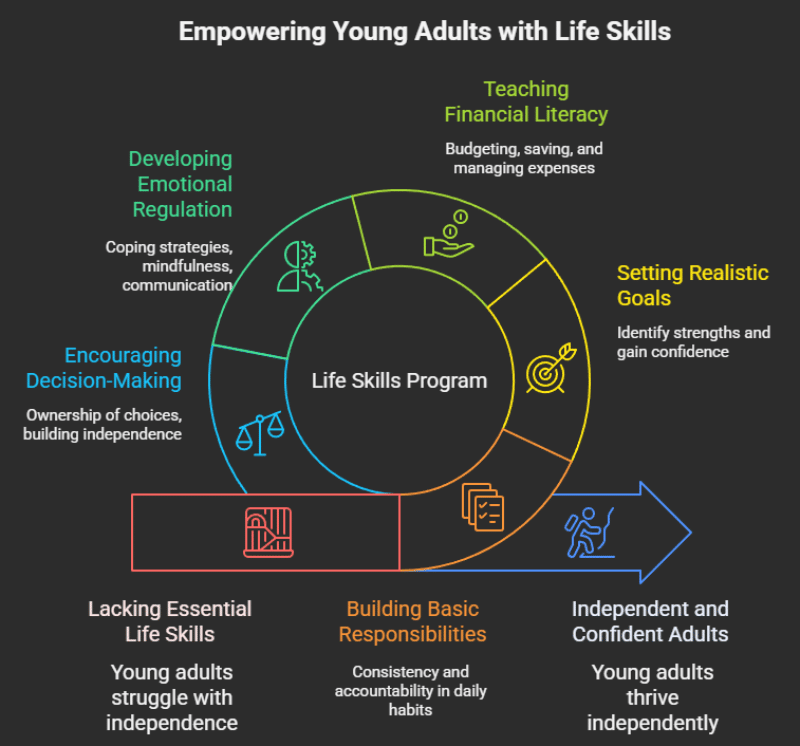
When Should You Consider a Life Skills Program for Young Adults?
Not every struggling young adult needs residential programming. But if your teen or young adult has two or more of these signs, it’s time to talk to a professional:
- Persistent avoidance of self-care, responsibilities, or social interaction
- No motivation about school, work, or their future
- Inability to handle criticism or setbacks
- Lack of basic life skills with zero interest in learning
- Visible signs of depression, anxiety, or isolation
- Family conflict escalating around these issues
- Previous therapy or counseling hasn’t led to change
- Financial dependence with no timeline for independence
A consultation with a therapist or program director can help you figure out the right level of care.
The Role of a Life Skills Program for Young Adults
If your teen does need professional support, here’s what a quality life skills program for young adults offers:
| Program Component | How It Helps |
|---|---|
| Clinical Therapy | Addresses depression, anxiety, trauma, and emotional blocks |
| Life Skills Training | Teaches cooking, laundry, budgeting, job skills, hygiene |
| Vocational Support | Builds work skills, resume writing, interview practice, job placement |
| Social Skills | Improves friendships, conflict resolution, communication |
| Structure & Accountability | Daily routines that build discipline and confidence |
| Peer Community | Reduces shame by connecting with others facing similar struggles |
| Family Involvement | Helps parents understand what to do differently at home |
At The Crossroads combines all of these. Our transitional living program in St. George, Utah, serves young adults from across the country. We focus on the whole person: the practical skills, the emotional health, and the path to independence.
What Life Skills Programs for Young Adults Can’t Do
A program can’t force your young adult to care. It can’t make them suddenly ambitious. And it can’t work if they refuse to engage.
What it can do is provide the right environment for change to happen. For young adults willing to try, a life skills program for young adults removes distractions, adds accountability, provides clinical support, and builds momentum. Over time, that momentum becomes self-sustaining.
Many young adults arrive resistant and leave grateful. The shift happens because they finally see themselves as capable.
Your Next Step
If you recognize two or more of these signs in your child, don’t wait. Talk to a professional. A therapist, counselor, or program director can help you understand whether a life skills program for young adults is the right move.
At The Crossroads is here to help. We’ve worked with hundreds of families in your exact situation. We know what works, and we know how to support your young adult through real change.
Contact At The Crossroads to help your teen now. Call (866) 439-0354 or email [email protected]. We’re available 24/7 for confidential consultations. We’ll listen to your situation, answer your questions, and help you figure out whether our program is the right fit for your family.
You don’t have to figure this out alone. Reach out today.
Recent Comments