
It is a milestone in the life of every young adult to move out. The freedom of feeding yourself can be intimidating without the proper know-how. While food delivery apps are great for convenience, you cannot rely on them for your health and wallet. In today’s world, teaching people to cook is one of life’s greatest skills and almost essential for living now. Cooking can lead to healthier eating, saving money and increasing independence.
Many young people feel out of their element in the kitchen. With the right resources, any beginner to an expert can make cooking a fun creative process instead of a scary task. High-quality cookbooks for excellent dinner parties that serve as a guide and source inspiration.
The right cookbook will not only give you a recipe or two. It will also teach you the basics, add new flavours to your palate and instil confidence in your ability to make a proper meal. The best cookbooks for beginners simplify complicated processes into manageable steps, so you can whip up a delicious meal with ease!
In this article, we are going to talk about the best cookbooks for young adults living alone. We are also going to share some useful tips that will help you cook.
Criteria for Selecting the Right Cookbook
Before we begin, it is worth mentioning what is a valuable cookbook for a young adult who is new to cooking. We examined several aspects when reviewing cookbooks.
Skill Level Appropriateness
Many people learn cooking from scratch while becoming independent or moving out. The best cookbooks for beginners provide clear instructions and are easy to understand. They describe the terms used for cooking methods, show you the basics, and fix your hiccups.
Choose a cookbook with step-by-step photos or illustrations. These visual guides can help you comprehend better learning new methods. We would like to find resources that meet you “where you are” and build your confidence slowly to manage the complexity.
Recipe Variety
It can be quite satisfying to perfect a handful of signature dishes; a cookbook full of different recipes helps avoid getting bored with them as well as encouraging creativity in the kitchen. Ideal cookbooks for young adults include a mix of.
- Quick weeknight meals for busy days.
- Budget-friendly options that stretch ingredients.
- Breakfast, lunch, dinner, and snack ideas.
- Basic versions of popular takeout dishes.
- Simple entertaining options for hosting friends.
- Meal prep recipes that create multiple servings.
You can also choose from regional varieties as your skills get better with time. This also provides flexibility to adjust to varied schedules, budgets and social situations, all of which are common to young adults.
Accessibility of Ingredients
Nothing stops us from getting a meal together faster than a recipe that calls for expensive or hard to find ingredients. The best cookbooks for beginners offer recipes made with supermarket ingredients and won’t cost a fortune.
Accessibility also relates to equipment requirements. The best cookbooks for young adults are designed for those who’ve got a limited setup. So you will not need any special tools or gadgets. The best cookbooks will say how to achieve that in the absence of a fancy gadget.
Keeping these in mind, let us take a look at our top picks of cookbooks that you can try to live independently.
Top Cookbook Recommendations
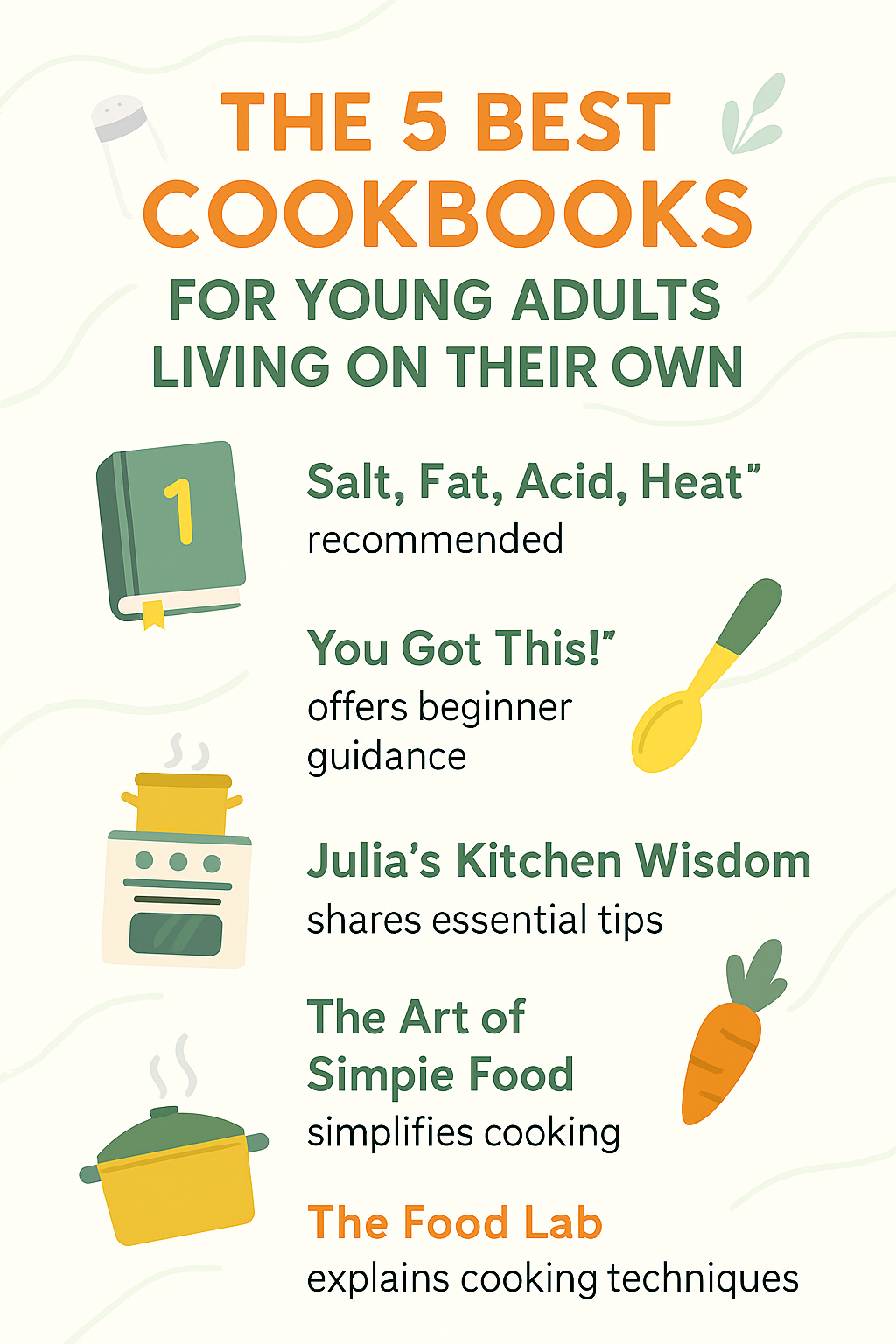
1. “Salt, Fat, Acid, Heat” by Samin Nosrat
Overview: Samin Nosrat’s game-changing cookbook doesn’t just give you recipes to follow. It teaches you the four building blocks of every successful dish: salt, fat, acid and heat. By understanding these essential principles, the readers learn to cook without following the rigid rules.
Why It’s Suitable: This is suitable as the writing style of Nosrat is engaging and conversational. The book is a cooking class and a recipe book with skills that can be applied to numerous other recipes. Cooking for Young Adults gives them the skills they need to develop a lasting competence.
Notable Features: Watercolor illustrations of dishes by Wendy MacNaughton enhance the book further with visual references on techniques and flavours. The first section concerns theory and principles, while the second section contains the recipes – 100+ of them – that put the lessons into practice. The creative use of charts for improvisation is possible after mastering the basics.
Salt, Fat, Acid, Heat is especially useful for people who want to know the “why” behind a cooking instruction, allowing readers to troubleshoot their recipes and eventually create their own variations.
2. “You Got This!” by Diane Morrisey
Overview: Created specifically with new cooks in mind, social media cooking sensation Diane Morrisey’s cookbook. The book has more than 100 recipes for people who like to keep an easy-to-cook pantry.
Why It’s Suitable: Morrisey’s approach is spot on for young adults; practical, budget orientated and never pretentious. The recipes are simple enough that there’s no chance of messing them up – making them easy to follow whether you’ve cooked before or not. You can easily whip up most of these dishes with ingredients you already have in your pantry because they’re very basic.
Notable Features: This bestselling title stands out for its “cook once, eat twice” recipes that help maximise efficiency – a major plus for time-poor young adults juggling work, study and socialising. The photography is welcoming, realistic and not overly styled, with results that feel achievable. Every recipe offers some suggestions for tweaks so the reader can adapt it based on what they have.
“You Got This!” offers authentic encouragement and respect for the idea that food preparation should fit, not run, our lives.
3. “Julia’s Kitchen Wisdom” by Julia Child
Overview: This delightful little book brings together everything Julia Child wants you to know. Julia’s Kitchen Wisdom goes beyond a comprehensive collection of complicated French recipes. It is about essential techniques and master recipes—the building blocks of cooking with confidence.
Why It’s Suitable: Julia Child, despite her fame, is surprisingly accessible and supportive. She helps readers conquer cooking basics by explaining things clearly and with the reassurance that mistakes happen and will be fixed if and when they do. The techniques covered are timeless rather than trend-led and allow you to learn skills that won’t date.
Notable Features: This book has recipes divided by types of food, like soups, vegetables, and meats, with a master recipe you can vary. In the Child, essential methods common to several recipes are described in the “Way to Cook” sections. Her troubleshooting tips are really good because they deal with common problems before they become frustrating failures.
Though “Julia’s Kitchen Wisdom” is smaller than many cookbooks, it still offers concentrated information that enhances real culinary comprehension rather than just the ability to make specific dishes.
4. “The Art of Simple Food” by Alice Waters
Overview: Alice Waters’ Farm-To-Table Cookbook Features Simple Recipes Using Quality Ingredients (19 words) “The Art of Simple Food” teaches us to make meals with fresh, seasonal, and affordable produce, and simple techniques that enhance natural flavors.
Why It’s Suitable: Waters’ philosophy of simple preparation is particularly well suited to the beginner who might be daunted by complex recipes. The book shows youngsters how to whip up satisfying meals without long lists of ingredients or complicated methods. Her philosophy encourages cost-effective cooking by utilizing seasonal products that are at their most affordable and delicious.
Notable Features: This book starts with basics like must-have equipment, basics in the pantry and the basic how-tos. Then it moves onto recipes. Waters’ recipes are organized by main ingredient so you can cook based on what looks good in the market. Throughout the book, she offers variations and improvisations to inspire confidence in altering the recipes.
The book “The Art of Simple Food” might be the best one to develop kid’s dinner inspiration and learn cooking according to the season instead of shopping list.
5. “The Food Lab” by J. Kenji López-Alt
Overview: For the scientifically minded young adult, they explain usage of equipment and techniques like cooking pasta in “The Food Lab”. Culinary expert J. Will it blend? Kenji López-Alt explains the science of cooking and he tests his recipes thoroughly.
Why It’s Suitable: With a background in engineering, López-Alt has a particular and methodical way of coming up with recipes that give consistent results. Young adult learners with a desire to learn why techniques work benefit from a knowledge-based approach that builds confidence through the elimination of guesswork.
Notable Features: Illustrated photographic techniques throughout the book provide step-by-step guidance for any baker. The recipes vary from classic time-savers for the everyday to weekend projects, all explained with the same detail.
López-Alt debunks common cooking myths and gives better, tested alternatives to use instead.
Though more advanced than some suggestions, “The Food Lab” rewards devoted beginners with a deep understanding of cooking and helpful tips that will help you improve much faster.
Tips for Getting Started
Once you have a good cookbook, you can start cooking. To ease into home cooking, here are some pointers to make it more enjoyable.
Start with Simple Recipes
The path to cooking confidence begins with small successes. Choose straightforward recipes with.
- Short ingredient lists (ideally under 10 items).
- Familiar ingredients you enjoy eating.
- Minimal specialized techniques.
- Reasonable preparation times (under 30 minutes to start).
Stir-fries, sandwiches, and pasta are good dishes to try your hands on. The success of each meal builds confidence for more ambitious ones. Don’t overwhelm yourself trying to make a fancy dish. Even professional chefs started with basic cooking.
The best way to begin is to try out new ingredients or techniques as you gain experience and add one at a time. By building slowly you don’t get overwhelmed but build your skill.
Stocking a Basic Pantry
Having a good pantry makes last-minute cooking easy and fun. While details differ from one person to another, these staples form the basis of many dishes.
Dry Goods:
- Rice (white and/or brown).
- Pasta (assorted shapes).
- Beans (canned and/or dried).
- Lentils.
- Oats.
- Flour.
- Sugar.
- Breadcrumbs.
Oils, Vinegars, and Condiments:
- Olive oil
- Vegetable or canola oil
- Balsamic vinegar
- Soy sauce
- Dijon mustard
- Mayonnaise
- Hot sauce
- Ketchup
Canned Goods:
- Diced tomatoes.
- Tomato paste.
- Tuna or other canned protein.
- Coconut milk.
- Broth/stock.
Spices and Seasonings:
- Salt (kosher or sea salt).
- Black pepper (whole peppercorns with grinder if possible).
- Garlic powder.
- Dried herbs (oregano, thyme, rosemary, bay leaves).
- Red pepper flakes.
- Cinnamon.
- Cumin.
Most enjoyable cuisines may gradually let you build on these basics. Building a pantry takes time as you’ll always use your pantry with new skills you learn to cook.
Practice Consistency
Like any skill, cooking improves with regular practice. Think about how to work cooking into your plans.
- Designate specific days for meal preparation.
- To start, cook dinner 2-3 times a week and go from there.
- Make extras on purpose so you won’t have to cook as much.
- Around Kitchen: Try a New Recipe Every Week. Repeat what you Familiar With!
- Invite friends over for easy meals, and make cooking a social activity!
Making simple dishes regularly will give you much more skill than making elaborate dishes once in a while. Take notes of successful recipes and modifications, so you can keep track of progress.

The Next Steps
When young adults first learn how to cook, it is one of the best investments. When you cook meals at home, it will not only help you eat more healthily and save money, but it also fosters creativity and develops your problems-solving skills while connecting with food culture.
Here’s a range of cookbooks with different cocktail philosophies and their strengths. Whatever it is you might enjoy—be that Nosrat’s elemental focus, Morrisey’s practical chaos, Child’s technical baseline, Waters’ ingredient-based simplicity, or Lopez-Alt’s scientific exactitude—the essential resource may just be the one that makes you an expert chef.
Don’t worry; you won’t become a culinary genius overnight! Never be afraid to learn. Your mistakes are part of the process. Have an easy outfit and let the cooking evolve with time.
You will see how cooking for yourself is not just a necessity but also a rewarding experience when you get these cookbooks, proper instruction, and a learning attitude. You’ll learn confidence, creativity and an important life skill from cooking that will stand you in good stead long after a first taste of independence.
No matter if you’re a beginner cook or an advanced chef, cooking can become your passion for life that helps you discover cultures, connect with people, and express yourself. Your culinary journey is just starting. Wishing you best fun.
Check out our Independent living program, where we teach these skills in depth to struggling young adults!
Recent Comments