

It’s one of the most challenging realities parents face today—seeing their young adult child struggle to take that next step toward independence.
Maybe they’ve moved back home after college. Maybe they’re not motivated to find a job or continue their education. Maybe they’re stuck, unsure of what comes next. These are some of the early signs of failure to launch, a growing issue affecting many families across the United States.
At The Crossroads, a trusted Young Adult Transitional Program in Utah, we work closely with young men and women who feel stuck between adolescence and adulthood. Understanding why this happens is the first step toward helping them move forward.
Key Takeaways
-
Recognizing the signs of failure to launch early allows parents to intervene before issues deepen.
-
Common causes include lack of direction, overdependence, fear of failure, mental health challenges, and missing life skills.
-
Supportive, structured programs help young adults build confidence, independence, and emotional resilience.
-
At The Crossroads in Utah provides personalized coaching, therapy, and skill development designed to help young adults launch successfully.
Here are the seven most common causes behind failure to launch—and how parents can begin to support lasting change.
1. Lack of Direction and Purpose
Many young adults who struggle to launch simply don’t know what they want from life. They may feel overwhelmed by the number of choices—or paralyzed by the fear of making the wrong one.
Without clear goals, daily structure, or a sense of direction, it’s easy to lose motivation. Programs like At The Crossroads help young adults identify their strengths, values, and interests to create a realistic plan for independence.
2. Overdependence on Parents
A major contributor to failure to launch is over-reliance on family support. When parents step in to handle every challenge—financial, emotional, or practical—it can unintentionally prevent growth.
While this often comes from love, it can create a cycle of dependency that makes it harder for young adults to face real-world responsibilities. Transitional programs work to break this cycle through accountability, coaching, and real-life skill-building.
3. Fear of Failure or Rejection
Perfectionism and fear of not being “good enough” often hold young adults back from pursuing goals. This fear can make them avoid challenges entirely—whether it’s applying for jobs, attending classes, or building relationships.
Therapeutic programs help young adults confront these fears in a safe, structured environment. Learning that failure is part of growth helps build resilience and confidence.
4. Mental Health Challenges
Conditions like anxiety, depression, ADHD, or social anxiety are among the most common underlying factors of failure to launch. These challenges can drain motivation, disrupt focus, and make everyday tasks feel overwhelming.
At At The Crossroads, mental health support is integrated into daily life. With individual therapy, group sessions, and coaching, young adults learn to manage emotions, build routines, and re-engage with their goals.
5. Lack of Life Skills
Young adults struggle simply because they were never taught the practical skills needed for independence—budgeting, cooking, managing time, or maintaining a job.
Without these skills, the leap to adulthood feels impossible. Transitional programs help by offering life skills coaching, giving participants hands-on experience in real-world situations.
6. Technology and Social Media Overload
While technology offers connection and opportunity, it also creates distractions and false comparisons. Constant exposure to social media can fuel procrastination, anxiety, and low self-esteem.
Many young adults caught in this loop find it hard to stay focused on long-term goals. Structured programs provide healthy boundaries, encouraging more active, real-world engagement and less screen dependence.
7. Lack of Supportive Structure
Finally, many young adults fail to launch because they simply don’t have the right environment. A structured yet supportive setting—one that combines accountability, therapy, and peer connection—can make all the difference.
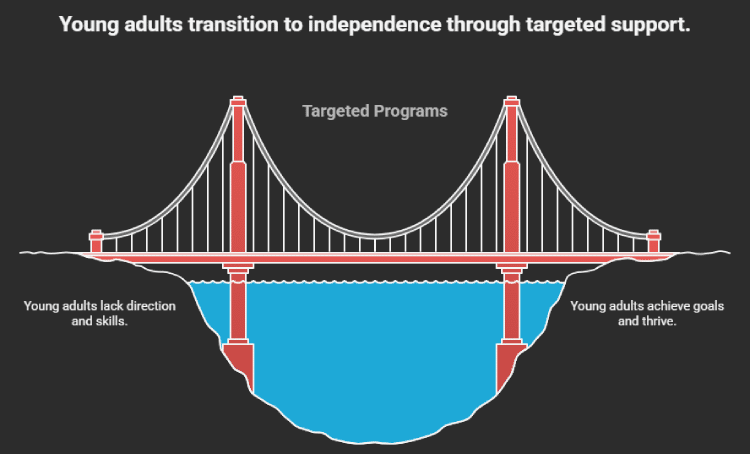
At The Crossroads, we combine mentorship, life coaching, and emotional support to help young adults gradually transition toward full independence.
Recognizing the Signs of Failure to Launch
Understanding the signs of failure to launch early can help parents act before patterns become deeply ingrained.
| Common Signs | What It Looks Like |
|---|---|
| Lack of motivation | Avoiding goals, no career direction |
| Emotional dependence | Relying heavily on parents for decisions |
| Social withdrawal | Isolating from friends or new relationships |
| Avoidance behavior | Procrastinating or giving up easily |
| Financial dependency | No effort to find or maintain work |
| Low self-esteem | Negative self-talk, fear of trying new things |
If these behaviors sound familiar, it might be time to consider professional help.
The Benefits of a Failure to Launch Program
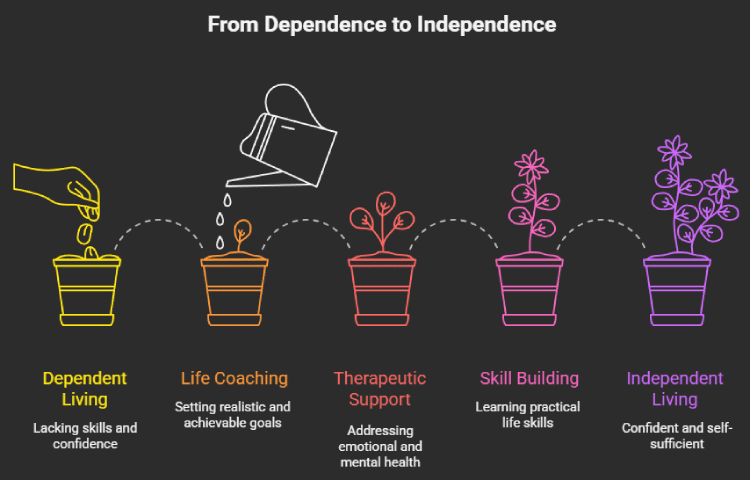
A failure to launch program helps young adults develop the confidence, structure, and skills they need to live independently. Some of the key benefits include:
-
Individualized life coaching for realistic goal-setting.
-
Therapeutic support to address emotional or mental health challenges.
-
Practical skill-building through budgeting, job readiness, and communication training.
-
Gradual independence, allowing participants to take ownership of their lives at a steady pace.
At The Crossroads, these elements are tailored to each participant’s unique needs, helping them transition from feeling stuck to standing strong.
Conclusion
Failure to launch doesn’t define your child—it simply signals that they need the right support to move forward. Understanding the causes behind their struggles is the first step toward meaningful change.
With professional guidance and a compassionate, structured approach, young adults can rediscover their motivation, build confidence, and take real steps toward independence.
Contact At The Crossroads now to help your teen start their journey toward independence today.
Recent Comments