

Watching your young adult struggle to take the next step in life can be painful. Maybe they’re still living at home, avoiding work or school, or seem unsure about their future. These signs of failure to launch are more common than many parents realize — and they can leave families feeling frustrated and uncertain about what to do next.
But here’s the good news: with the right guidance, structure, and support, young adults can move from being “stuck” to fully independent. At At The Crossroads, a Utah-based Failure to Launch program, we specialize in helping young adults rediscover motivation, build essential life skills, and gain the confidence to thrive.
This article will guide you through a step-by-step launch plan designed to help your young adult transition toward independence — safely, gradually, and effectively.
Key Takeaways
-
Recognizing the signs of failure to launch early allows for proactive intervention.
-
Success comes from structured, step-by-step planning, not quick fixes.
-
Life Skills Coaching and emotional support are essential for long-term independence.
-
Programs like At The Crossroads provide the structure, community, and accountability needed to guide young adults toward independence.
-
With consistent guidance and support, even the most “stuck” young adult can build the confidence to thrive.
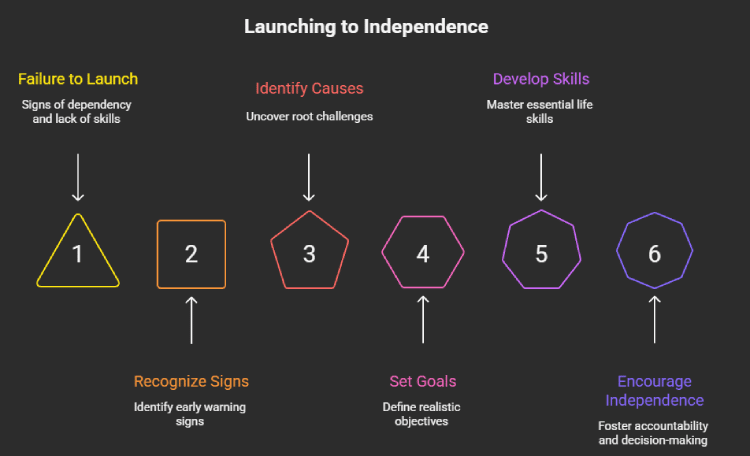
Step 1: Recognize the Signs of Failure to Launch
The first step in creating any effective plan is recognition. Understanding the signs of failure to launch allows parents and professionals to intervene early — before patterns of dependency become deeply rooted.
Common signs include:
-
Difficulty holding a job or finishing school
-
Avoidance of responsibility or decision-making
-
Social withdrawal or lack of motivation
-
Low self-esteem or fear of failure
-
Overreliance on parents for emotional or financial support
-
Poor coping skills or emotional regulation
When these behaviors persist, it’s often not laziness — it’s a signal that your young adult needs structured support, guidance, and accountability to learn how to launch successfully.
Step 2: Identify the Root Causes
Failure to launch rarely happens overnight. It’s usually a combination of emotional, social, and developmental challenges that have built up over time.
Common underlying factors include:
-
Anxiety or depression that makes adult responsibilities feel overwhelming
-
Lack of direction or purpose after high school or college
-
Overprotective parenting, which unintentionally limits growth opportunities
-
Skill gaps, such as time management, budgeting, or communication
-
Substance use or unhealthy coping mechanisms
At The Crossroads, trained mentors and therapists work to uncover these root causes through comprehensive assessments. Once identified, a tailored action plan is created to address them — step by step.
Step 3: Set Realistic and Achievable Goals
A successful launch plan starts with clear, realistic goals. Big changes don’t happen overnight, but progress can begin with small, consistent wins.
Examples of early goals might include:
| Short-Term Goals | Long-Term Goals |
|---|---|
| Waking up on a consistent schedule | Maintaining full-time employment |
| Preparing healthy meals | Living independently |
| Attending weekly therapy sessions | Building meaningful relationships |
| Managing a personal budget | Pursuing higher education or career advancement |
Each milestone builds momentum, giving your young adult a sense of purpose and progress — both essential for confidence and independence.
Step 4: Develop Core Life Skills
Many young adults who show signs of failure to launch simply haven’t mastered the day-to-day skills necessary for adulthood. Life Skills Coaching is one of the most effective tools for addressing this gap.
Key areas of focus include:
-
Financial literacy – budgeting, saving, and responsible spending
-
Time management – planning daily routines and balancing responsibilities
-
Career readiness – job applications, interview preparation, and workplace communication
-
Emotional intelligence – managing stress and developing healthy relationships
At At The Crossroads, these skills are practiced through real-world experiences, helping participants gain confidence in their ability to handle life’s challenges on their own.
Step 5: Encourage Accountability and Independence
True growth comes from accountability. Young adults need opportunities to make decisions — and learn from them.
In structured environments like At The Crossroads, mentors provide guidance while allowing natural consequences to teach responsibility. This balance ensures that progress is self-driven, not parent-driven.
As independence increases, parental involvement often shifts. Families are guided through parent coaching sessions, learning how to support their child’s growth without enabling old patterns of dependency.
Step 6: Create a Supportive Environment
Sustained independence doesn’t happen in isolation. A supportive environment — emotionally, socially, and physically — plays a major role in long-term success.
At The Crossroads provides a community-based model that encourages peer connection, emotional growth, and responsibility. Through therapy, mentoring, and structured living experiences, young adults learn how to function within a supportive yet accountable community — preparing them for life beyond the program.
Step 7: Track Progress and Adjust the Plan
Every young adult’s journey looks different. Regular evaluation helps ensure that the plan remains relevant and effective. Coaches and therapists at At The Crossroads adjust strategies as goals are met, barriers arise, or new opportunities appear.
By tracking progress, parents can see measurable growth — often in areas that once seemed impossible.
Conclusion
Helping your young adult move from dependency to independence is not about forcing change — it’s about guiding growth. Through clear goals, skill development, and consistent accountability, your child can regain direction and confidence.
If you’re seeing the signs of failure to launch, know that support is available.
Contact At The Crossroads now to help your teen take the next step toward independence and a fulfilling future.
Recent Comments