

Choosing the right Failure to Launch (FTL) program for your young adult can feel overwhelming. You want to help your child build independence, develop confidence, and start living a self-sufficient life — but with so many programs available, how do you know which one truly fits their needs?
The best Failure to Launch programs do more than provide structure — they focus on emotional growth, life skills, and long-term independence. In this guide, we’ll help you understand what to look for, what questions to ask, and how to find a program that sets your child up for lasting success.
Key Takeaways
-
The right Failure to Launch program provides both emotional and practical support for long-term independence.
-
Look for a balance between therapy, life skills training, and community integration.
-
If your child shows signs of failure to launch, early intervention can prevent long-term dependency.
-
At The Crossroads offers personalized, therapeutic, and skill-building programs to help young adults find direction and confidence.
What Is a Failure to Launch Program?
A Failure to Launch program is designed for young adults who struggle to transition into independent adulthood. This can include individuals who are living at home without clear direction, avoiding responsibilities, or showing little motivation to work or study.
While occasional setbacks are normal, persistent patterns may point to deeper issues. If your young adult shows signs of failure to launch—such as low self-esteem, poor coping skills, or avoidance of responsibility—a structured program can provide the guidance and tools they need to move forward.
Programs like At The Crossroads, based in Utah, specialize in helping young adults overcome emotional, social, and practical barriers through personalized coaching and therapeutic support.
Key Factors to Consider When Choosing a Failure to Launch Program
Not all programs are created equal. Here are the most important aspects to evaluate before making your decision.
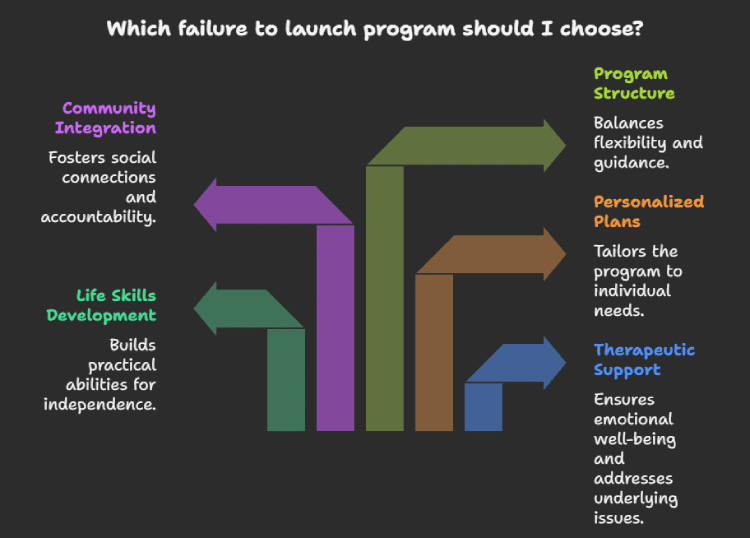
1. Therapeutic and Emotional Support
Many young adults experiencing failure to launch struggle with anxiety, depression, or emotional immaturity. A strong program should include access to licensed therapists, life coaches, or counselors who can address underlying emotional challenges—not just surface-level behaviors.
Ask this:
-
Does the program provide individualized therapy or group sessions?
-
Are mental health professionals on staff?
2. Life Skills Development
True independence requires practical abilities. The program should teach life skills such as time management, budgeting, cooking, communication, and job readiness. These skills build confidence and prepare participants for sustainable adulthood.
Ask this:
-
What specific life skills are taught?
-
Are there real-world applications, like internships or volunteer work?
3. Personalized Treatment Plans
Every young adult’s journey is different. A one-size-fits-all approach rarely works. The best programs create a personalized roadmap based on your child’s unique goals, strengths, and challenges.
Ask this:
-
How is progress measured and reviewed?
-
Will my child receive one-on-one guidance?
4. Community and Social Integration
Many struggling young adults feel isolated. Look for programs that emphasize community living or group activities that foster social connection and accountability. Learning to live cooperatively is key to growth and maturity.
Ask this:
-
Is the environment community-based?
-
How does the program encourage healthy peer relationships?
5. Length and Level of Structure
Some programs are short-term and highly structured, while others are longer-term with more flexibility. It’s important to find a balance that meets your child’s current readiness level.
| Type of Program | Description | Best For |
|---|---|---|
| Highly Structured | Daily routines, strict schedules, close supervision | Young adults needing strong accountability |
| Flexible/Step-Down | Gradual independence, self-paced learning | Those ready to transition to autonomy |
| Community-Based | Real-world integration, apartment-style living | Young adults developing self-management skills |
The Benefits of a Failure to Launch Program
When thoughtfully chosen, a program can be life-changing for both the young adult and their family.
Benefits include:
-
Improved emotional regulation and resilience
-
Increased motivation and goal-setting ability
-
Development of independent living skills
-
Better relationships with parents and peers
-
Long-term confidence and self-sufficiency
At At The Crossroads, young adults work with mentors, therapists, and coaches to rebuild confidence, learn accountability, and practice real-world decision-making—all within a supportive, community-centered setting.
Questions to Ask Before Enrolling Your Child
Before making your final decision, consider asking these key questions:
-
What is the staff-to-student ratio?
-
What types of therapy and coaching are offered?
-
How does the program handle setbacks or relapses?
-
What is the expected timeline for progress?
-
Are parents involved in the process?
The answers to these questions will help you ensure that your child receives compassionate, structured, and professional support.
Conclusion
Helping your young adult transition into independent living isn’t about pushing them out of the nest—it’s about giving them the right tools, guidance, and support to soar on their own.
A quality Failure to Launch program can make all the difference, turning uncertainty into purpose and dependency into independence.
Contact At The Crossroads now to help your teen begin their journey toward confidence and independence today.
Recent Comments