

Understanding when your young adult is struggling to move forward in life can be difficult. Some hesitation is normal, but when independence never quite happens — that’s when you may be witnessing signs of failure to launch.
At At The Crossroads, we work with young adults across Utah and beyond who are stuck between adolescence and adulthood. Recognizing these signs early is the first step to helping them regain momentum, build confidence, and move toward an independent, fulfilling life.
Key Takeaways
-
The signs of failure to launch include emotional dependence, avoidance of responsibility, and lack of motivation or direction.
-
Many young adults struggle not from unwillingness, but from anxiety, fear of failure, or lack of life skills.
-
Early intervention with a structured program can help prevent long-term challenges.
-
Professional transitional programs, like At The Crossroads in Utah, provide therapy, coaching, and hands-on life skills development.
-
Parents play a vital role in recognizing signs early and setting healthy boundaries for growth.
What Is “Failure to Launch”?
“Failure to launch” isn’t a diagnosis — it’s a pattern of behavior where a young adult has difficulty transitioning into independent living. This may include trouble maintaining employment, pursuing education, or managing responsibilities without significant parental involvement.
In most cases, it’s not laziness. It’s often a mix of anxiety, lack of life skills, emotional dependence, or low motivation. Understanding these underlying causes helps parents and guardians provide the right kind of support rather than frustration or pressure.
Common Signs of Failure to Launch
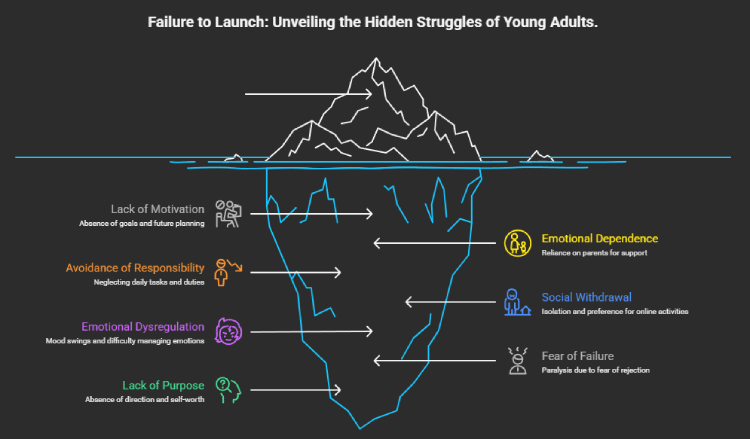
Every young adult’s journey looks different, but certain patterns tend to repeat. Here are the most common signs that your child may be struggling to “launch.”
1. Lack of Motivation or Direction
They may express little interest in setting goals or planning for the future. Simple steps like applying for jobs or completing schoolwork may feel overwhelming.
2. Emotional Dependence on Parents
A key sign of failure to launch is ongoing emotional or financial reliance. Young adults might look to parents for constant reassurance or decision-making instead of building independence.
3. Avoidance of Responsibility
They might avoid tasks like cleaning, budgeting, or keeping a job. Everyday responsibilities can feel too heavy without consistent guidance or encouragement.
4. Social Withdrawal or Isolation
Many who experience failure to launch struggle with low confidence or social anxiety. This often leads to spending long hours alone, gaming, or online — rather than building real-world relationships.
5. Difficulty Managing Emotions
Mood swings, irritability, or emotional outbursts can signal deeper frustration, depression, or anxiety — all of which can block progress toward independence.
6. Fear of Failure
A fear of rejection or not being “good enough” can paralyze decision-making. This perfectionism can create a cycle of inaction, reinforcing the young adult’s belief that success is out of reach.
7. Lack of Purpose or Identity
Without structure or goals, many young adults lose sight of who they are and what they want. They might drift through life without a sense of personal direction or self-worth.
Why These Signs Matter
Ignoring the signs of failure to launch can lead to long-term emotional and social challenges. Over time, avoidance patterns harden, making it harder to develop independence later in life.
Early intervention — through structured programs, coaching, and therapy — can help break that cycle. The right support provides both accountability and encouragement, guiding young adults toward real growth.
How Failure to Launch Programs Help
At At The Crossroads, we’ve seen young adults transform when given the right mix of guidance, structure, and compassion. Our program focuses on:
| Support Area | What It Includes | Benefits |
|---|---|---|
| Life Skills Training | Budgeting, cooking, time management, and self-care | Builds daily independence |
| Therapeutic Support | Individual and group counseling | Addresses emotional barriers |
| Career & Education Coaching | Job readiness and school planning | Creates direction and motivation |
| Community Integration | Volunteer and peer activities | Builds confidence and connection |
These experiences not only help young adults function independently but also empower them to believe in themselves again.
The Role of Parents
Parents often walk a fine line between support and enabling. While helping is natural, doing too much can unintentionally reinforce dependence. Setting healthy boundaries and encouraging accountability are key steps in fostering growth.
At At The Crossroads, we also provide family coaching to help parents navigate this transition period — ensuring that everyone in the family moves forward together.
When to Seek Professional Help
If your young adult has shown several signs of failure to launch for more than a few months — especially if emotional distress, isolation, or dependency are increasing — professional help is a wise step.
Programs like ours are designed to meet young adults where they are, helping them rebuild life skills, develop confidence, and take measurable steps toward independence.
Conclusion
The journey to independence can be challenging — but it’s never too late to start. Recognizing the signs of failure to launch is the first step toward real change. With compassionate guidance and structured support, young adults can rediscover motivation, purpose, and confidence.
Contact At The Crossroads now to help your teen or young adult take the first step toward independence.
Recent Comments