

When a young adult struggles to move forward in life — avoiding independence, work, or education — it’s often labeled as a “failure to launch.” While the phrase might sound casual, its long-term impact is anything but. Without proper guidance and early intervention, these patterns can carry into adulthood, affecting self-esteem, relationships, and emotional well-being.
At At The Crossroads, a leading young adult transitional program in Utah, we’ve seen how recognizing early signs of failure to launch and providing the right structure can completely change the trajectory of a young person’s life.
Key Takeaways
-
The signs of failure to launch often appear as avoidance, low motivation, or dependence on parents.
-
Without early support, these behaviors can lead to long-term emotional and professional challenges.
-
Early intervention through structured programs like At The Crossroads builds confidence, accountability, and independence.
-
Families play a critical role in recognizing the issue and encouraging the right kind of support.
-
Addressing the problem early leads to healthier, more self-sufficient young adults.
Understanding Failure to Launch
Failure to launch describes a situation where a young adult is unable or unwilling to take on the responsibilities of adult life. This may include not pursuing education or career goals, struggling with daily routines, or relying heavily on parents for emotional and financial support.
Common Signs of Failure to Launch
-
Lack of motivation or direction
-
Avoidance of work or school commitments
-
Social withdrawal or isolation
-
Low self-confidence or self-esteem
-
Dependence on parents for decision-making or finances
-
Anxiety or depression tied to independence
Recognizing these early helps parents and caregivers step in with meaningful support rather than enabling unhealthy patterns.
The Hidden Cost of Avoiding Independence
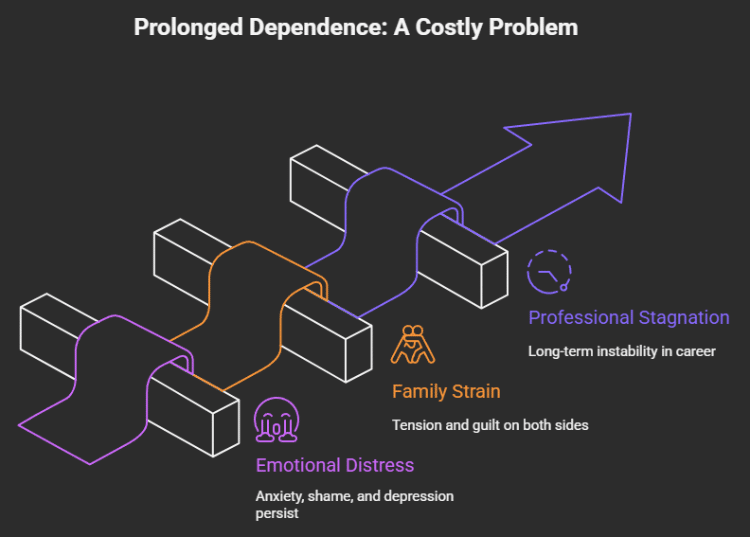
When failure to launch is left unaddressed, the effects can extend far beyond a young adult’s 20s. The lack of life skills, self-reliance, and confidence can make it difficult to maintain employment, relationships, and emotional balance.
Emotional and Psychological Effects
Many young adults who experience this issue report persistent anxiety, shame, and depression. They may compare themselves to peers who have “moved on,” which deepens the cycle of self-doubt.
Family Strain
Parents often feel torn between helping and enabling. The emotional toll can strain family relationships, creating tension and guilt on both sides.
Professional Stagnation
Without intervention, the delay in developing career or educational goals can result in long-term instability. By their 30s, these individuals may find it increasingly difficult to enter the workforce or live independently.
Why Early Intervention Matters
Early support can help young adults break the cycle before it becomes deeply rooted. Intervention doesn’t mean punishment—it’s about building a foundation for growth.
Benefits of Early Intervention
| Challenge | How Early Support Helps |
|---|---|
| Lack of structure | Builds daily routines and accountability |
| Low confidence | Develops self-worth through small wins |
| Anxiety about independence | Provides emotional coaching and coping skills |
| Family tension | Creates healthier boundaries and communication patterns |
Programs like At The Crossroads use individualized coaching, therapy, and real-life skill-building to bridge the gap between dependence and independence.
How At The Crossroads Helps Young Adults Move Forward
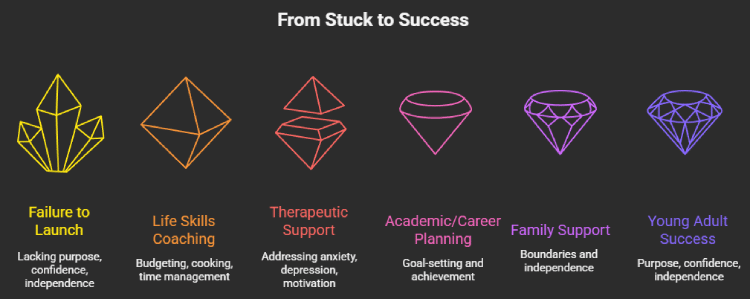
At At The Crossroads, we specialize in helping young adults rediscover purpose, confidence, and independence. Our Failure to Launch programs in Utah combine structure, therapy, and life-skills training to help young adults overcome emotional and practical barriers to success.
Our Core Services Include:
-
Life Skills Coaching – Teaching budgeting, cooking, time management, and self-care
-
Therapeutic Support – Helping address anxiety, depression, and motivation issues
-
Academic and Career Planning – Encouraging personal growth through goal-setting and achievement
-
Family Support and Education – Empowering parents to create boundaries and support independence
Our holistic approach ensures that young adults are not just getting help—they’re gaining tools for lifelong resilience.
Recognizing the Turning Point
The earlier the intervention, the better the long-term results. Parents should look out for signs of failure to launch early—before patterns of dependency become deeply ingrained. It’s never too late, but starting now can mean the difference between ongoing struggle and lasting success.
If your teen or young adult feels stuck, uncertain, or unmotivated, professional guidance can help them reclaim their independence and confidence.
Conclusion
Failure to launch isn’t a permanent condition—it’s a challenge that can be overcome with the right guidance and support. By recognizing the signs of failure to launch early and seeking structured help, families can prevent long-term struggles and help their young adult step into adulthood with confidence.
Contact At The Crossroads now to help your teen take the first step toward independence.
Recent Comments